Cloned voices: the “loved one in trouble” scam
A call from your child or your parent urgently asking for money? A few seconds of recording are now enough to imitate a voice.
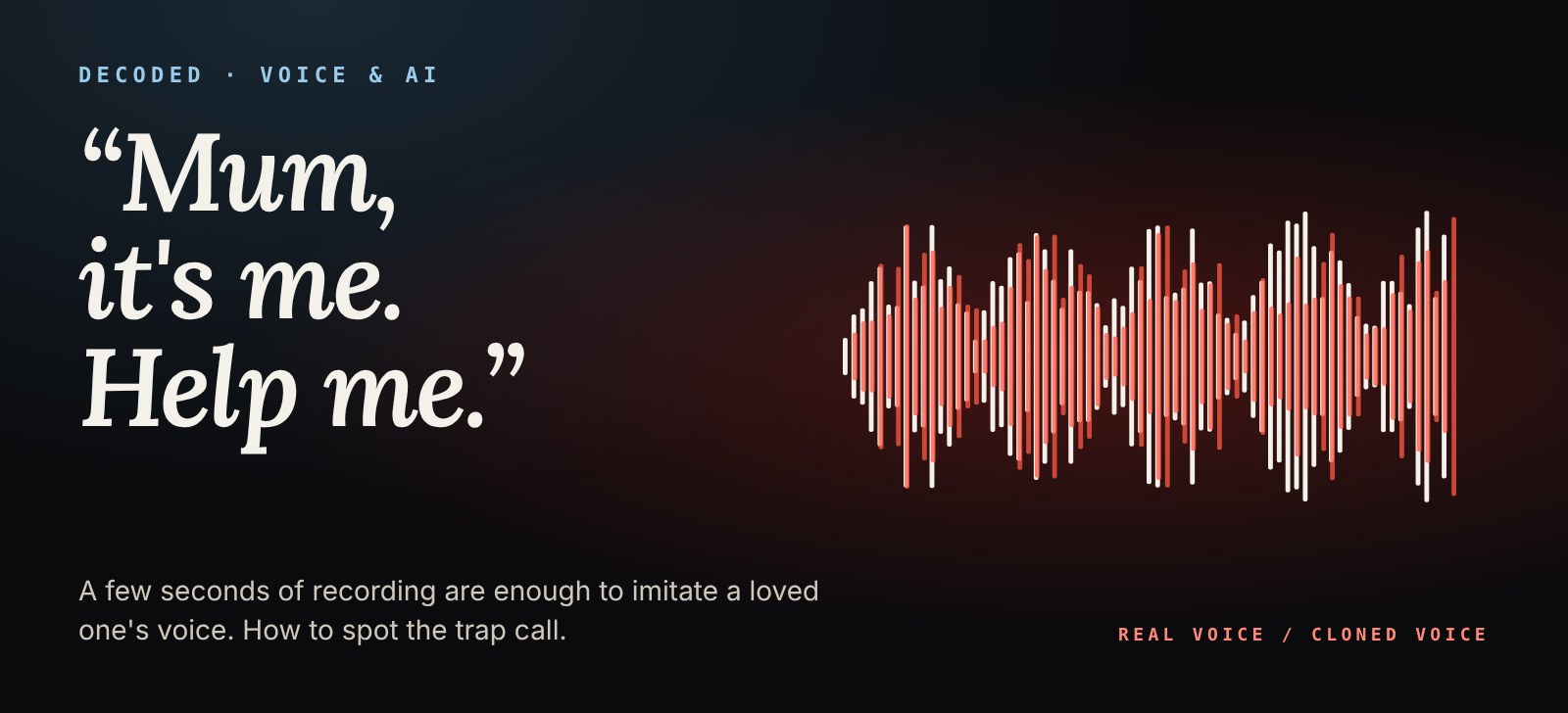
The fake relative scam isn’t new. What’s changing is the voice. As security company ESET puts it, a few seconds of recording are enough for scammers to create a convincing deepfake. Those few seconds are often taken from social media.
How the scam works
You get a call or a voice message from a loved one: an accident, a lost phone, sometimes a fake kidnapping. The recording is short, with crying or background noise to create panic. The call often comes when the person is hard to reach, for example while travelling. And you’re asked to act fast.
Warning signs
- An unknown number, or an excuse for not using the usual one.
- An urgent request for money, by bank transfer, prepaid card or cryptocurrency.
- A request for secrecy: “don’t tell anyone”.
- A familiar voice, but a very short message that avoids questions.
The right reflex: a family safe word
Agree on a secret word or phrase as a family, easy to remember but impossible to find online (avoid the dog’s name or the favourite football team). If a call seems suspicious, ask for it. Otherwise, hang up and call your loved one back on their usual number.
With Afensia, upload the audio clip to the voice analysis: it estimates whether the voice may have been cloned by AI. But always call your loved one back before sending anything.
If you’ve already paid
Cut off all contact, call your bank, keep the evidence (numbers, recordings) and report it to the police, or in France via 17cyber.gouv.fr. Then beware of offers to “recover your money” for a fee: they are often a second scam.